
Will a Dumpster Damage My Driveway? A Macon, GA Homeowner’s Guide
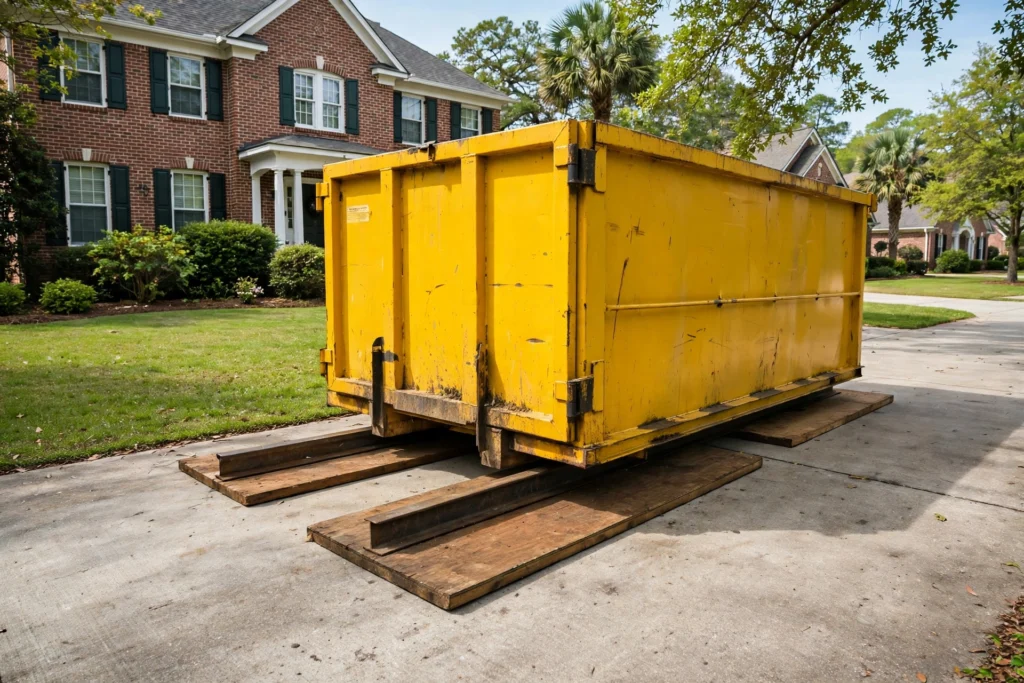
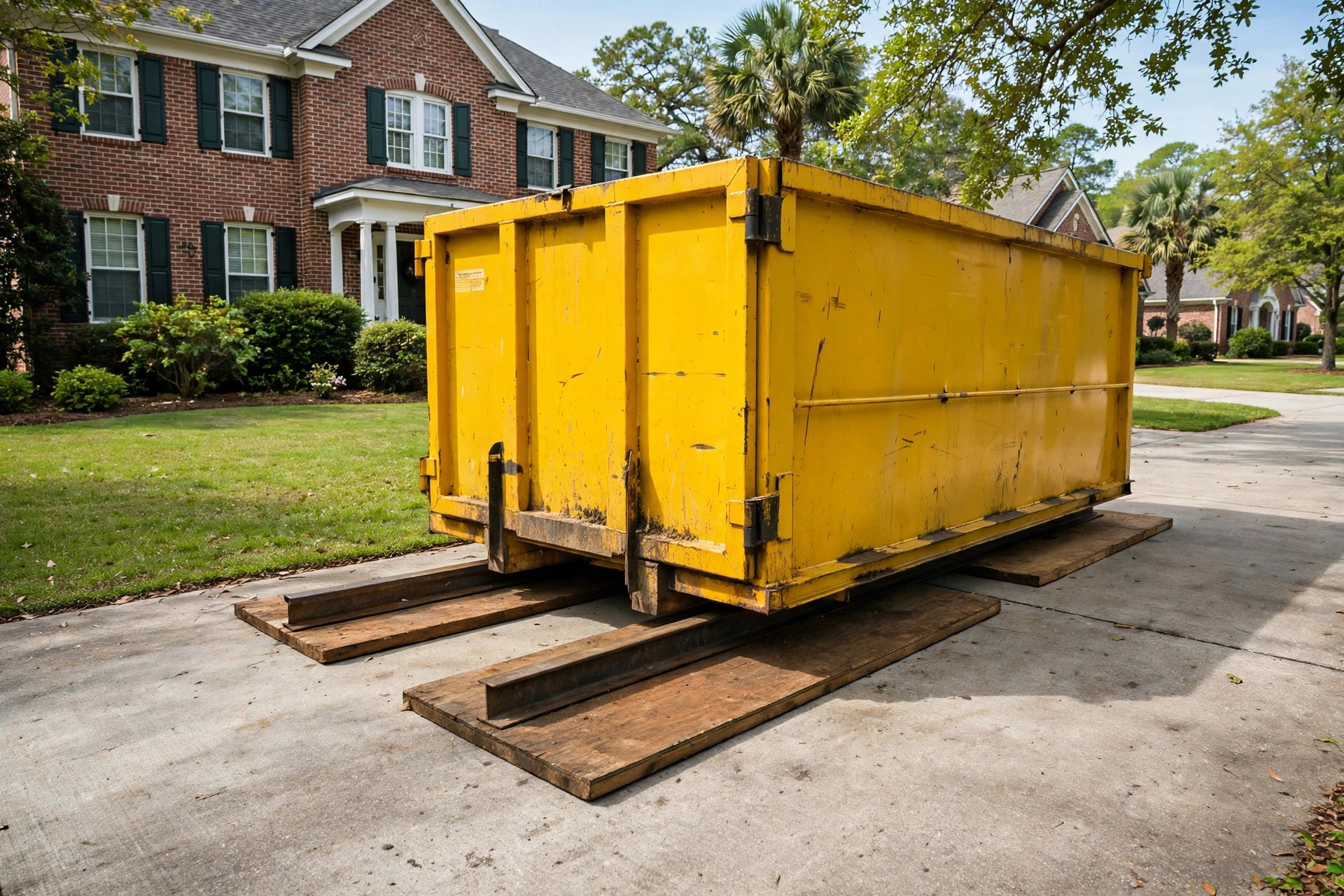
Short answer: Will a dumpster damage my driveway? A dumpster can damage a driveway, but in most cases it doesn’t have to. The risk comes from concentrated weight – a loaded 20-yard roll-off dumpster can weigh over 10,000 pounds, all pressing down through a few small contact points. With plywood laid under the container’s rails, sensible placement, and a careful driver, most driveways in Macon come through a rental without a single mark.
If you’re planning a cleanout, remodel, roofing job, or storm cleanup and the dumpster has to sit in your driveway, this guide covers exactly how damage happens, which driveways in Middle Georgia are most vulnerable, and the simple steps that keep your concrete or asphalt safe.
Will a Dumpster Damage My Driveway? Here’s How It Happens
A dumpster damages driveways through point loading — thousands of pounds concentrated on the small steel rails and wheels the container rests on, rather than spread across the surface.
An empty 20-yard roll-off already weighs roughly 4,000 to 6,000 pounds of steel before you throw a single thing in it. Load it with roofing shingles, broken concrete, plaster, or wet drywall and the total can easily pass 10,000 pounds — heavier loads can go well beyond that. All of that mass doesn’t sit evenly. A roll-off rides on two rear wheels and rests on its front rails, so the full weight funnels through contact patches no bigger than your two hands.
Engineers call this point loading, and it’s what cracks slabs — not the total tonnage so much as the tonnage divided by the square inches carrying it. The same physics explains why a woman in high heels dents a wood floor that a refrigerator doesn’t: pressure, not weight, does the damage.
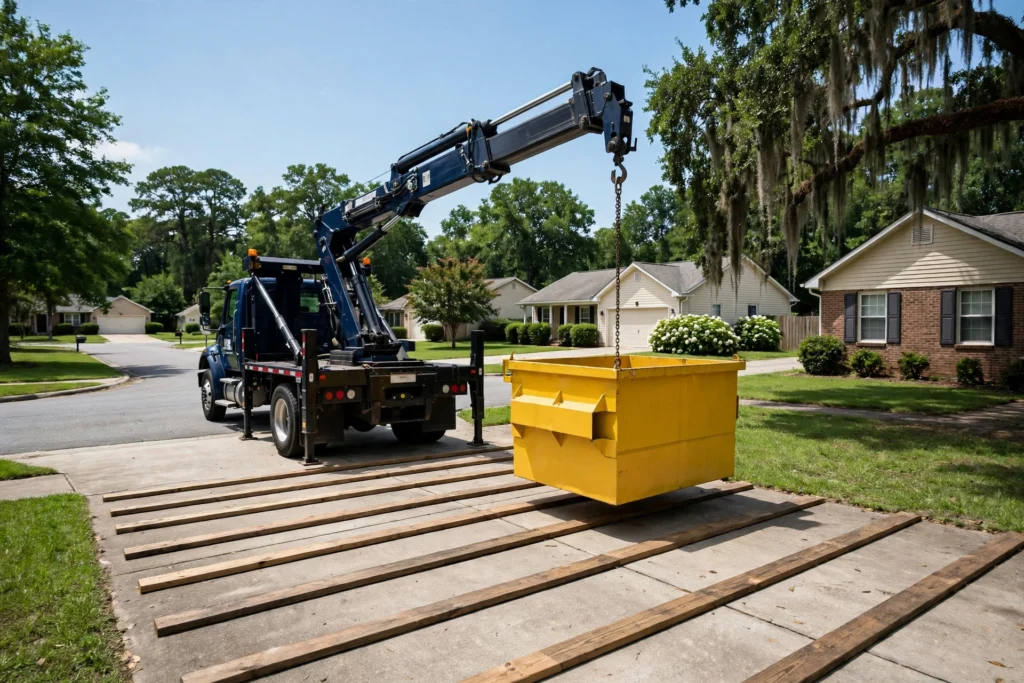
Two moments cause most of the harm. The first is delivery, when the container rolls off the tilted truck bed and the wheels bite into the surface as it drags into position. The second is pickup, when the winch hauls a fully loaded container back up and every pound drags across your driveway at once. If your driveway is going to get hurt, it almost always happens in one of those two windows — not while the dumpster is simply sitting there.
Which Driveways Are Most at Risk in Macon, GA?
In Macon, asphalt driveways face the highest risk — especially in summer — followed by older concrete with existing cracks. Pavers can shift under sustained weight.
Not all surfaces handle a roll-off equally, and Middle Georgia’s climate tilts the odds:
Asphalt driveways — highest risk. Asphalt is a petroleum product, and Macon’s long, hot summers are its enemy. When surface temperatures climb into the 90s (and asphalt in direct sun runs far hotter than the air), the material softens and turns pliable. A heavy point load will press right into softened asphalt and leave a permanent dent or rut. A dumpster delivered on a cool morning in October is a very different proposition from the same dumpster sitting on the same driveway through a week in August.
Concrete driveways — moderate risk. Concrete handles compression well, so a healthy slab usually shrugs off a roll-off. The vulnerability is in the details: existing hairline cracks can spread under sustained load, edges and joints are brittle compared to the field of the slab, and concrete poured within the last year hasn’t reached full maturity. Before delivery day, walk your driveway and look for warning signs — spiderweb cracking, low spots where water pools, or sections that sound hollow.
Paver driveways — moderate risk. Pavers themselves are tough, but they sit on a compacted base. If that base wasn’t impeccably compacted, sustained concentrated weight can press individual pavers down unevenly, leaving a wavy patch that’s expensive to re-level.
Gravel or dirt — lowest surface risk, different problem. The container won’t crack anything, but steel rails can sink into soft ground after rain, making pickup harder. A few sheets of plywood solve that too.
How to Protect Your Driveway When Renting a Dumpster
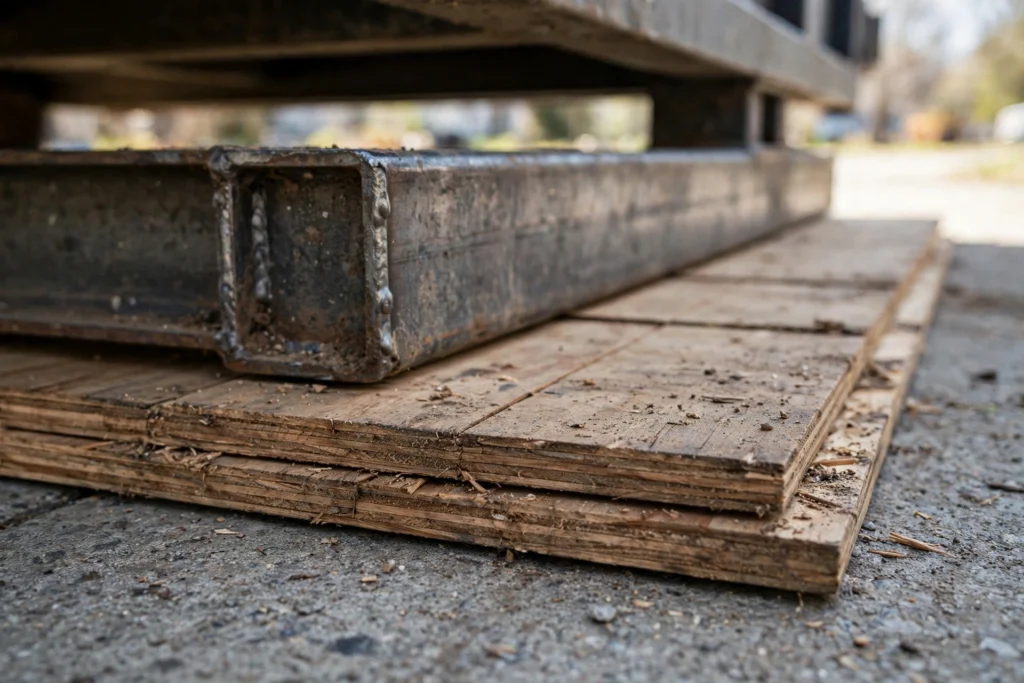
Lay ¾-inch plywood or thick boards under every contact point, choose the strongest section of driveway, and tell your rental company about your surface when you book.
Driveway damage is almost entirely preventable. Here’s what actually works, in order of impact:
1. Put wood between the steel and your driveway. This is the single most effective step. Two sheets of ¾-inch plywood (or doubled-up boards like 2x10s) under each rail take those tiny point loads and spread them across square feet instead of square inches. Cover the rear wheels and the front rails — the front lip is the spot people forget, and it’s often the sharpest point load on the whole container. About twenty dollars of lumber and ten minutes of work.
2. Pick the strongest placement. Aim for the thickest, flattest section of the driveway — not bridging an expansion joint, not on the thin apron near the street, and not over a spot you know is already cracked. Keep the container’s rear gate clear so you can load by wheelbarrow without dragging debris across the concrete.
3. Mention your driveway when you book. Tell the rental company what surface you have and what condition it’s in. A good dispatcher will note it for the driver, plan the approach, and tell you whether they bring protective boards or you’d rather lay your own. If you’re renting a dumpster in Macon, GA, call (478) 226-0739 and mention your driveway surface — we’ll plan the placement with you before the truck ever rolls.
4. Time it smart in summer. If you have an asphalt driveway and it’s July or August in Macon, ask for a morning delivery when the surface is coolest and firmest. Avoid booking the drop for the hottest afternoon of a heat wave if you can.
5. Load evenly. Don’t pile all the heavy material — shingles, tile, concrete chunks — at one end. Spread dense debris across the full floor of the container so weight stays balanced over the protected contact points.
When Is the Risk Highest? Delivery and Pickup Day
Delivery and pickup are the two highest-risk moments, because that’s when thousands of pounds drag and roll across your surface instead of just resting on it.
During the rental itself, a stationary container on plywood is about as threatening as a parked car. The danger windows are the minutes the truck is working: the bed tilts, the container’s wheels bite and roll, and the full loaded weight scrapes across the surface on the way up at pickup.
What helps most on those days:
- Clear the approach. The truck needs a straight, level run at the placement spot. Move cars, trailers, basketball goals, and trash cans out of the path the night before.
- Mark the exact spot. Cones, chalk, or even a trash can showing where the container should land means the driver gets it right the first time instead of repositioning — every reposition is another drag across your driveway.
- Be reachable. You don’t have to stand in the driveway, but keep your phone handy. If the driver has a question about placement, a 30-second call beats a guess.
- Check overhead clearance. Low limbs and wires force awkward angles. Trim back anything hanging over the drop zone.
If something does go wrong — a scuff, a cracked paver — document it with photos the same day and call the company. Reputable haulers would rather hear about it immediately than discover it in a review later.
What If Your Driveway Already Has Cracks?
Existing cracks don’t disqualify you from renting a dumpster — they just mean placement and protection matter more.
Hairline cracks are normal in Georgia concrete; our clay soils shift with wet and dry seasons, and almost every driveway over a decade old has a few. The rule of thumb: cracks wider than a credit card edge, sections that have settled unevenly, or areas where water pools are the ones to keep the container’s rails away from.
If your whole driveway is in rough shape, consider two alternatives. First, place the dumpster on the street instead — just know that in Macon-Bibb County, a container on a public street or right-of-way may need a temporary placement permit (check current requirements at maconbibb.us). Second, ask about a smaller container: a 10-yard dumpster keeps total weight lower than a 20 or 30-yard on a fragile surface, and for many cleanouts it’s plenty — see our dumpster sizes guide to compare.
Renting a Dumpster in Macon, GA? What to Ask Before Delivery Day
Before you book, ask three questions: what’s the total loaded weight I should plan for, do you protect driveways on delivery, and where exactly will the driver place it.
The cheapest quote isn’t the best value if it comes with a cracked driveway and a shrug. When you’re comparing residential dumpster rental options in Macon, Warner Robins, Gray, or anywhere in Bibb County, the company that asks you about your driveway surface before quoting is usually the one that’ll take care of it.
A quick checklist for booking day:
- Describe your driveway: concrete, asphalt, pavers, or gravel — and its age and condition
- Ask how the driver protects surfaces during delivery and pickup
- Confirm the exact placement spot and the truck’s approach path
- Ask about rental pricing including the weight allowance, so heavy debris doesn’t surprise you
- Get the delivery window in writing, especially for morning drops in summer
We deliver roll-off dumpsters across Macon and Middle Georgia every day, and driveway protection is part of the conversation before the truck leaves the yard — not an afterthought. Call (478) 226-0739 or contact us and tell us about your project and your driveway. We’ll recommend the right size and plan a placement that keeps your property looking the way it did before we arrived.
Frequently Asked Questions
Will a 20-yard dumpster crack my concrete driveway?
Usually not, if the concrete is in good condition and the container sits on plywood. A healthy 4-inch residential slab handles a loaded 20-yard without issue. The risk rises with pre-existing cracks, thin or poorly supported sections, and fresh concrete less than a year old.
How thick should plywood be under a dumpster?
¾-inch plywood is the standard recommendation — either a single sheet of exterior-grade ¾-inch or two thinner sheets stacked. Cut them into roughly 4×4-foot squares and place them under every rail and wheel contact point, not just the back ones.
Can a dumpster sit on an asphalt driveway in summer?
It can, but summer is when asphalt is most vulnerable in Macon. Heat softens the surface, so always use plywood, request a morning delivery when the asphalt is coolest, and keep the rental period as short as practical. If your asphalt is already rutted or crumbling, consider street placement with a permit instead.
Who pays if a dumpster damages my driveway?
It depends on the rental agreement and the circumstances. Document any damage with photos on the day it happens and contact the company immediately. This is another reason to choose a hauler that discusses driveway protection before delivery — it signals they’ll stand behind their work after it.
A loaded dumpster is heavy, but driveway damage is a choice — not a certainty. A few sheets of plywood, a smart placement, and a company that plans the drop with your property in mind are all it takes. Ready to book? Call (478) 226-0739 for dumpster rental in Macon, GA with flat-rate pricing and same-day delivery.

3 Comments