
Macon Tear-Off & Re-Roof Specialists
Roofing Dumpster Rental in Macon, GA
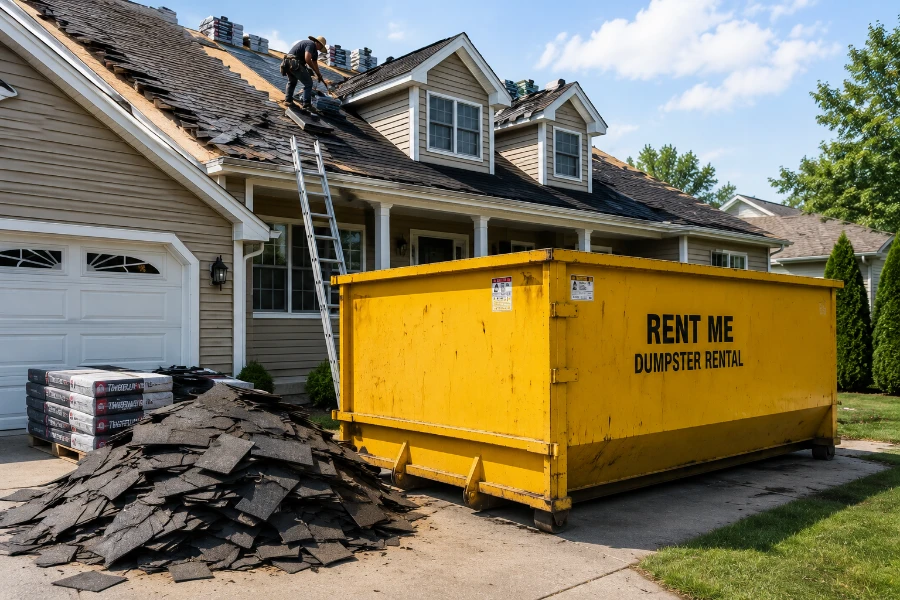
Our roofing dumpster rental Macon is designed for heavy roofing debris, including shingles, decking, and multi-layer tear-offs, with fast delivery throughout Bibb County and Middle Georgia.
Sized For Shingle Weight
Same-Day Drop-Off
Storm Cleanup Ready
No Hidden Overage Fees
Weight-Smart Roofing Debris Removal
The Right Roll-Off for a Roofing Tear-Off in Macon
A roofing tear-off looks simple until the shingles hit the container. Asphalt is dense, and a Macon re-roof can pack thousands of pounds of debris into a small footprint. How many squares of shingles are you pulling, and how many layers are stacked up there? Those two answers decide the container size far more than the size of your house does.
We drop weight-rated roll-off dumpsters across Macon, Warner Robins, Perry, Byron, and Gray — from Ingleside and Vineville re-roofs to commercial flat-roof jobs in North Macon. You get a flat rate that accounts for shingle tonnage up front, so a heavy tear-off never turns into a surprise overage bill.
What We Handle
Roofing Tear-Offs We Handle Across Macon
🏠
Full Roof Tear-Offs
Complete shingle removal for a re-roof — asphalt, architectural, or 3-tab. We size for the weight, not just the pile height.
⛈️
Storm & Hail Damage
Fast turnaround after Macon storms so your roofer can strip and dry-in before the next rain rolls through Middle Georgia.
📚
Multi-Layer Removals
Two or three layers of old shingles? That debris is dense and heavy — we plan the container size around the extra tonnage.
🏢
Commercial & Flat Roofs
TPO, EPDM, and built-up roofing tear-offs for Macon businesses, warehouses, and property managers on a schedule.
🪵
Tear-Off + Decking
Rotten plywood, felt, flashing, and old decking all go in one container so your crew keeps moving.
🔨
DIY Re-Roofs
Homeowners tackling a garage, shed, or small ranch roof themselves get a right-sized bin dropped in the driveway.
Sizing by Squares & Layers
What Size Roofing Dumpster Do You Need in Macon?
Roofing debris is graded by weight, not just volume, so a “big” roof and a “small” roof can need very different bins. A single-layer asphalt tear-off on a Macon ranch often fits a 15-yard roll-off ($375+), while a two- or three-layer job or a larger home usually needs a 20-yard ($395+). Commercial and multi-building tear-offs step up to 30–40 yards ($450–$725). Not sure whether your tear-off counts as one layer or two? Tell us the roof’s square footage and age and we’ll size it right the first time.
The Weight Factor
Why Roofing Debris Doesn’t Follow Normal Sizing Rules
A cube of shingles weighs far more than the same cube of cardboard or drywall, so roofing bins hit their weight limit long before they look full. That’s why national broker sites — which price by volume and then subcontract to whoever’s cheapest — so often stick roofers with overage bills. We’re local to Macon, we know exactly what an asphalt or multi-layer tear-off weighs, and we quote a flat rate that already accounts for the tonnage. No middleman markup, no surprise charge when the truck scales the load.
More Ways We Help
Related Dumpster Services in Macon
Good to Know
Roofing Dumpster Questions, Answered
How much does a roofing dumpster cost in Macon?
Roofing roll-offs start at
75+ for a 15-yard container. Because shingle debris is heavy, we quote a flat rate that already includes a realistic weight allowance, so you won’t get surprised by an overage bill after the tear-off.What size dumpster do I need for a roof tear-off?
A single-layer asphalt tear-off on an average Macon home usually fits a 15-yard bin, while two- or three-layer removals or larger roofs need a 20-yard. Commercial and multi-building jobs step up to 30–40 yards. Tell us the roof’s square footage, age, and number of layers and we’ll size it exactly.
Why are roofing dumpsters priced differently than other debris?
Shingles are dense — a roofing bin hits its weight limit long before it looks full. We price for the tonnage of asphalt and decking, not just the volume, which is why our flat rate for a roof job differs from a lightweight cleanout.
Can you deliver fast for storm damage?
Yes. After Macon storms we run same-day and next-day drops so your roofer can strip the damage and dry-in before the next rain. Just call and tell us the address in Bibb County or the surrounding area.
Do you serve areas outside Macon?
We cover Macon plus Warner Robins, Perry, Byron, Gray, Forsyth, and Bonaire, along with neighborhoods like Ingleside, Vineville, North Macon, and Shirley Hills. If your roofing job is in Middle Georgia, we can usually reach it.
How long can I keep the roofing dumpster?
Our standard roofing rentals run on a project-or-contract basis, so the bin stays as long as your tear-off and re-roof take. Let us know your timeline up front and we’ll build it into the flat rate with no daily-rush pressure on your crew.
Ready for Your Macon Roofing Tear-Off?
Get a fast, flat-rate quote and we’ll drop a weight-rated roofing dumpster anywhere in Macon or Middle Georgia — often the same day you call.